THE THRILL OF THRILLER
Testing the Test of Time: Music Videos, CGI and AI
By Indie Stream Media
Deck: More than four decades after Michael Jackson walked out of a movie theater and into pop-culture immortality, Thriller still looks, moves and feels like an event. In an age when CGI can build anything and AI can generate almost everything, the greatest music video ever made reminds us that technology is only as powerful as the vision behind it.
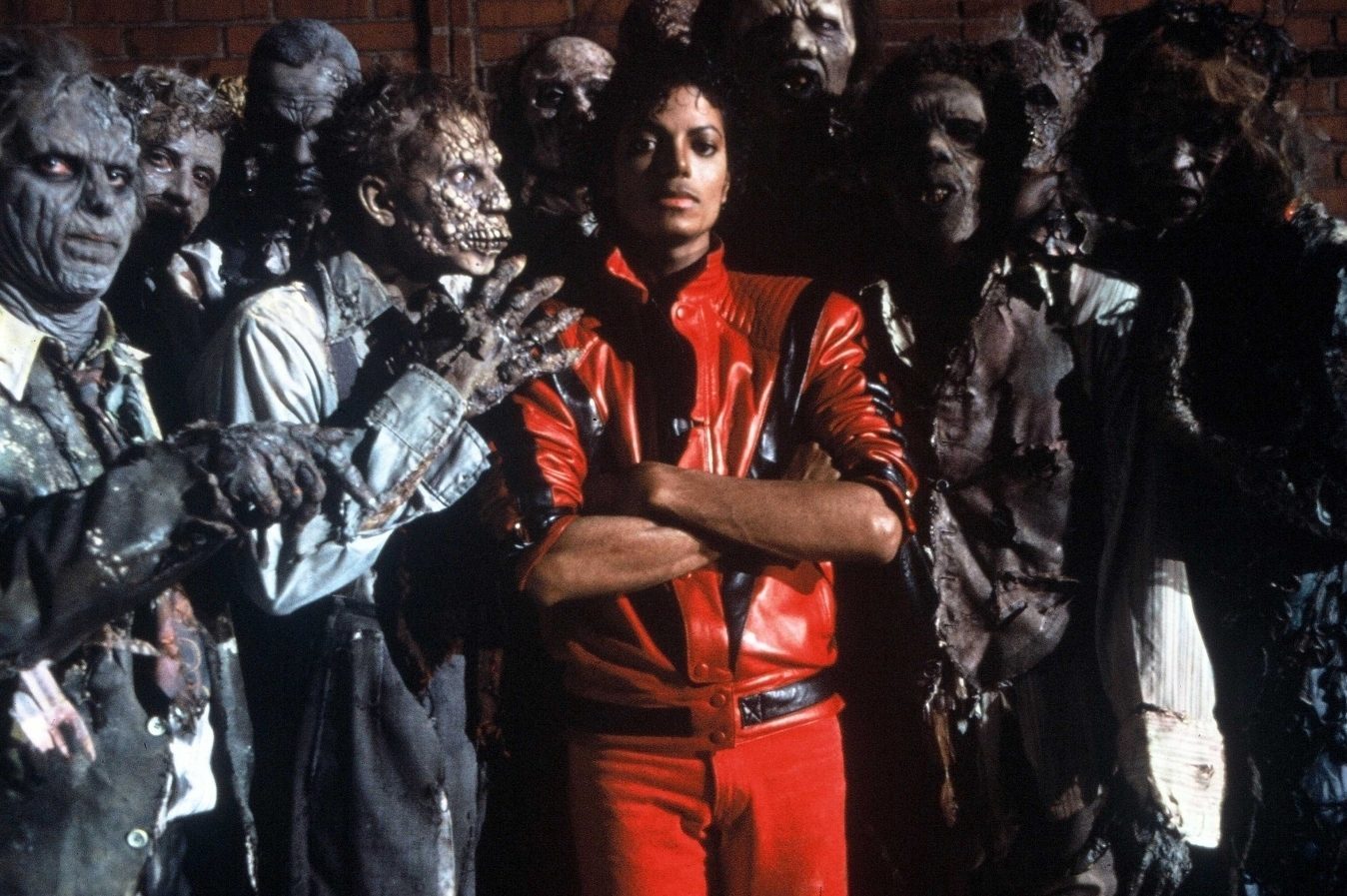
Michael Jackson and the undead ensemble in the dance sequence that became a global visual language. Image: promotional still via R7.
There are music videos that capture a moment. There are music videos that define an era. And then there is Michael Jackson’s Thriller—a 14-minute short film that did something even bigger: it changed what audiences believed a music video could be.
Calling it the best music video in history is not nostalgia talking. It is not simply because Michael Jackson was the biggest star in the world, because the red jacket became iconic, or because generations of people know at least part of the zombie dance. Thriller is the greatest because every major part of it still works: the concept, suspense, comedy, choreography, costume design, practical effects, cinematography, sound, star power and—most importantly—the story.
It did not use technology as a shortcut. It used craft to create an illusion. That difference is why Thriller has survived VHS, cable television, DVDs, YouTube, 4K restoration, CGI and now generative AI without losing its bite.
INDIE STREAM VERDICT: Plenty of videos have looked more expensive. Some have used more advanced effects. Others may have been stranger, sexier or more controversial. But no music video has combined cinema, music, movement, marketing and cultural impact more completely than Thriller.
Before the Beat Drops, a Movie Begins
The first genius move is that Thriller refuses to act like a normal music video.
Michael Jackson and Ola Ray are not introduced on a stage. They are a young couple in a 1950s-style horror picture whose car has broken down. Michael tells her he is “not like other guys.” Then the full moon appears, the transformation begins and the pop star disappears inside a monster.
That opening gives us characters, chemistry, danger and a twist before the familiar song even starts. Then the film pulls back and reveals that Michael and his date are watching the scene inside a movie theater. It is a playful fake-out—but also a warning. In Thriller, you cannot completely trust the boundary between the screen and real life.
That is filmmaking, not filler.
Director John Landis had already directed An American Werewolf in London, and Michael specifically wanted the kind of transformation he had seen in that movie. Landis and Jackson built Thriller as a short horror-comedy with its own dramatic score, dialogue and narrative rhythm. The Library of Congress credits Robert Paynter as director of photography, Michael Peters and Jackson as choreographers, Rick Baker for special makeup effects, and Elmer Bernstein for the additional music effects. This was a real film crew treating a pop video like cinema—not a singer standing in front of random expensive images.
The Technology You Can Feel

The transformation was built on the performer through prosthetics, makeup and patient human craftsmanship. Image: still from The Making of Michael Jackson’s Thriller via SensCritique.
Today, a filmmaker could ask software to change Michael into a creature. In 1983, Rick Baker’s team had to build the creature onto him.
Latex appliances, contact lenses, teeth, hair, paint, wardrobe, lighting and performance all had to cooperate. The zombies had real faces under real prosthetics. Their clothes occupied the same physical streets as their bodies. Light struck every wrinkle, wound and raised edge. When they turned, the effect turned with them.
That physical presence matters. Even when the viewer knows it is makeup, the camera photographed something that actually existed in front of the lens. The actors could see one another. The dancers could respond to one another. The imperfections gave the creatures personality.
The effects were not asked to carry the film by themselves, either. Baker’s makeup gets us through the door, but Jackson’s performance sells the transformation. Watch his eyes. Watch the switch in his posture. Watch the pleasure he seems to take in frightening his date—and the audience. The technology supports the acting rather than replacing it.
This is the first great lesson Thriller offers the CGI and AI eras: a tool should deepen the idea, not become the idea.
The Dance That Turned Horror Into a Block Party
The zombie dance is where Thriller becomes immortal.
On paper, it should not work. Zombies stagger. Dancers need control. Zombies represent decay; pop choreography is about precision. Michael Peters and Jackson found the bridge between those opposites. The ensemble moves as a unit, but every bent wrist, stiff neck and dragging leg remains rooted in the behavior of the undead.
That is why the choreography feels inseparable from the concept. You could hear the song without seeing the video, but once you have seen the dance, it lives inside the record forever. The bass line seems to make the bodies rise. The snare hits become steps. The monster theme becomes communal celebration.
And the scene is readable. Modern editing often tries to manufacture energy through a storm of cuts. Thriller trusts formation, framing and full-body movement. The camera allows us to see the dancers earn the moment. Wide shots establish scale. Medium shots give Michael command. Close-ups sell the creatures. Editing builds momentum without destroying geography.
The video did not merely create choreography people admired. It created choreography people could perform: at talent shows, weddings, Halloween parties, prisons, flash mobs and city squares around the world. That is the difference between a successful scene and a piece of cultural language.
The Red Jacket Was Production Design, Branding and Myth
The red-and-black jacket is one of the most recognizable costumes in entertainment history, but its power is not accidental. Costume designer Deborah Nadoolman Landis gave Michael a sharp silhouette and a saturated color that would separate him from the dark nighttime backgrounds and the earth-toned crowd of zombies.
It also gave the audience a visual anchor. No matter how crowded the frame became, you always knew where the star was.
That is branding at the highest level: not a logo pasted onto a product, but a design choice that improves the storytelling and becomes inseparable from the artist. The jacket, white socks, black shoes and controlled flashes of Michael’s face form an instantly identifiable image—even in silhouette, parody or animation.
It Understood the Power of the Event
Thriller arrived in December 1983, roughly a year after the album had been released. Instead of treating that timing as a problem, the team turned the video into a second launch.
The production was extraordinarily ambitious for a music video of its time, with a budget widely reported around $500,000. A making-of documentary helped finance and market the project. The premiere was treated like a movie opening. MTV presented the film as appointment television and told viewers when it would air again. The behind-the-scenes special became its own product on home video.
In other words, Thriller was not only great content. It was a content universe before marketers began using that phrase.
There was the song. The album. The short film. The making-of documentary. The television event. The home-video release. The choreography. The fashion. The annual Halloween rebirth. Each piece pushed attention back toward the others.
That model looks remarkably modern. One master work creates clips, conversation, behind-the-scenes access, products, replay value and community participation. Indie creators trying to build a media system in 2026 can still study the rollout.
When CGI Entered the Music-Video Conversation
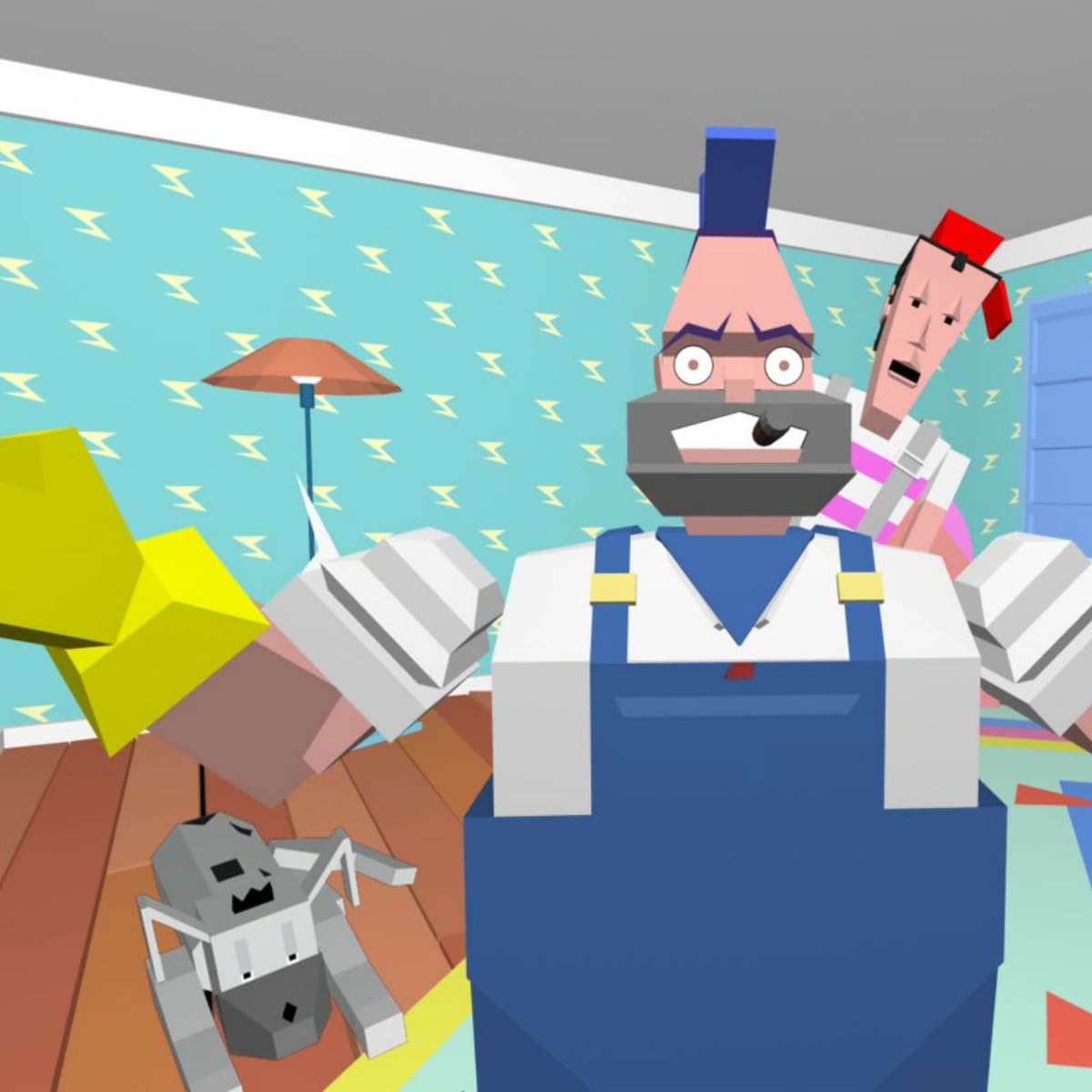
Dire Straits’ “Money for Nothing” made the hard-edged limitations of early CGI part of its identity. Image: video still via LA NACION.
Only two years after Thriller, Dire Straits’ “Money for Nothing” helped introduce mainstream MTV audiences to computer-generated 3D imagery. Its blocky workers and bright geometric rooms looked futuristic precisely because audiences had not seen much like them.
The video still matters historically, but its graphics also reveal the machine and the period that created them. That is not necessarily a weakness. Technology can age into style. A visual effect survives when its limitations become part of the artistic language.
The trouble begins when creators use a new tool only because it is new. Music-video history is filled with once-expensive digital imagery that now looks weightless, plastic or disconnected from the performer. Perfectly rendered objects can become dated faster than imperfect physical ones because audiences quickly learn the visual grammar of each software generation.
Thriller avoids that trap. Its effects belong to a designed world. The makeup has texture. The streets have depth. The dancers cast shadows. The sweat, fabric and fog occupy the same space. Even the fantasy is grounded in physical evidence.
CGI eventually became capable of astonishing work, from impossible camera moves and digital environments to invisible cleanup audiences never notice. It is not the enemy of great filmmaking. The question is whether the image serves the emotion. The best CGI disappears into the experience. The weakest CGI asks to be applauded for existing.
Now AI Can Make Anything—But Can It Make Us Care?
Generative AI has lowered the barrier again. One artist with a laptop can now imagine worlds that once required a studio, visual-effects department, costume shop, camera crew and months of post-production. That is exciting, especially for independent creators who have always possessed more imagination than money.
But abundance creates a new problem: when everyone can generate spectacle, spectacle alone stops being special.
An AI image can offer a beautiful monster in seconds. Thriller makes us anticipate the monster, react to the monster, dance with the monster and remember the monster more than 40 years later. The difference is not pixels. It is structure.
AI can generate a haunted street, but who decided why we are there? It can create 100 costumes, but which one tells us who the star is? It can simulate camera movement, but where should the audience look? It can manufacture faces, but what relationship are those faces expressing? It can imitate a thousand styles, but what does the artist actually want to say?
That is the test of the AI music-video era. The winning creators will not be the ones who generate the most. They will be the ones who select, direct, refine and connect. AI may democratize production, but it cannot outsource taste. It can expand a filmmaker’s reach; it cannot automatically supply a point of view.
The lesson of Thriller is not “never use AI.” The lesson is to give the tool a job inside a larger human vision. Use it to previsualize, extend a set, explore makeup, build a transition or make an impossible independent idea achievable. But do not confuse the ability to create an image with the ability to create an unforgettable moment.
The Video Respects the Audience
Another reason Thriller lasts: it knows viewers enjoy participating.
The film gives us layers of reality, visual clues, transformations and a final wink. Is Michael a normal boyfriend watching a monster movie? Is the zombie sequence fantasy? What does that last look into the camera mean? Vincent Price’s laugh closes the door without locking it.
The humor matters as much as the horror. Michael eating popcorn while Ola’s character suffers through the movie is funny. His teasing walk home is funny. Even the zombie choreography carries a mischievous joy. The film understands tone well enough to frighten children, amuse adults and invite everybody back.
That balance is difficult. Too much horror could have narrowed the audience. Too much comedy could have killed the danger. Too much romance could have slowed the music. Too much choreography could have stopped the story. Thriller keeps changing shape before any single ingredient wears out.
It Changed More Than Music Videos
The Library of Congress describes Thriller as a music short enhanced by dramatic narrative, choreography, makeup and special effects. In 2009, it became the first music video selected for the National Film Registry—formal recognition that the work mattered not only to pop promotion but to American film culture.
Its broader impact is hard to separate from Michael Jackson’s role in expanding the presence of Black artists on MTV and in global pop culture. Billie Jean and Beat It had already pushed the door open. Thriller came through it like a parade. The scale of the film made it impossible to treat the Black performer at its center as a niche act. Michael was not being inserted into somebody else’s mythology. He was building a mythology the entire industry had to follow.
The video also helped make the director, choreographer, makeup artist and making-of process part of the public conversation. It taught fans that the creation of a visual could be entertainment, too. Every behind-the-scenes featurette, production diary and social-media breakdown that turns process into promotion owes something to that playbook.
Why Thriller Still Wins
The greatest music video should do more than look good. It should change the song, the artist, the medium and the audience’s expectations.
Thriller did all four.
It gave the song an annual life beyond radio. It transformed Michael Jackson from superstar into a cinematic character. It made music video budgets, premieres and narratives more ambitious. It taught the audience to wait for a video like they would wait for a film. Then it outlived the delivery systems that first made it famous.
Most importantly, you can remove the historical importance and the film is still entertaining. A young viewer does not need a lecture about MTV in 1983 to understand the date, the movie theater, the warning, the transformation, the chase, the dance and the final reveal. The storytelling remains clear.
That is what passing the test of time really means.
Technology keeps giving artists new powers. Thriller keeps reminding them what those powers are for.
The makeup served the transformation. The choreography served the monsters. The costume served the star. The camera served the dance. The marketing served the event. And every piece served a simple promise: for the next 14 minutes, Michael Jackson was going to show you something you had never seen before.
More than four decades later, we are still watching.
WATCH: Michael Jackson’s Thriller (Official 4K Video)
Watch the official Thriller short film on YouTube
WATCH NEXT: The Making of Michael Jackson’s Thriller
For readers who want to see the practical makeup, rehearsals and filmmaking behind the finished work:
WATCH: Dire Straits — “Money for Nothing”
An essential comparison point for the rise of computer-generated imagery in the MTV era:
Watch “Money for Nothing” on YouTube
READER POLL
Is Michael Jackson’s Thriller the greatest music video ever made?
- Yes—nothing else comes close.
- It is Top 5, but I have another No. 1.
- It is the most important, not necessarily the best.
- No—tell us your pick in the comments.
Sound off: Which video belongs in the same conversation—“Sledgehammer,” “Take on Me,” “Formation,” “This Is America,” “Alright,” “California Love,” “HUMBLE.,” or something else?
SEO AND PUBLISHING PACKAGE
SEO title: Why Michael Jackson’s “Thriller” Is Still the Greatest Music Video Ever Made
Search description: Michael Jackson’s “Thriller” changed music videos forever. Indie Stream examines its story, zombie dance, practical effects, MTV impact—and why it still beats the CGI and AI eras.
Suggested URL slug:
michael-jackson-thriller-greatest-music-video-cgi-ai
Labels/tags: Michael Jackson, Thriller, Music Videos, MTV, CGI, Artificial Intelligence, AI Video, Pop Culture, Black Music History, John Landis, Rick Baker, Indie Stream Features
Suggested homepage headline: CGI Got Better. AI Got Faster. Michael Jackson’s “Thriller” Is Still Untouchable.
Social caption: CGI can build anything. AI can generate almost everything. But more than 40 years later, Michael Jackson’s Thriller still feels more alive than most music videos made today. Indie Stream breaks down the story, practical effects, zombie choreography, cultural impact and the one thing technology still cannot manufacture: an unforgettable vision. Is Thriller the greatest music video ever made?
SOURCES AND FURTHER READING
- Library of Congress catalog record: Michael Jackson’s Thriller
- Official Michael Jackson “Thriller” short film on YouTube
- Wired: Rebecca Allen and early 3D music-video animation
Editor’s note: Images are linked as editorial placements. Confirm reuse rights or replace them with licensed/official embed assets before commercial publication.
THE THRILL OF THRILLER
Testing the Test of Time: Music Videos, CGI and AI
By Indie Stream Media
Deck: More than four decades after Michael Jackson walked out of a movie theater and into pop-culture immortality, Thriller still looks, moves and feels like an event. In an age when CGI can build anything and AI can generate almost everything, the greatest music video ever made reminds us that technology is only as powerful as the vision behind it.
Michael Jackson and the undead ensemble in the dance sequence that became a global visual language. Image: promotional still via R7.
There are music videos that capture a moment. There are music videos that define an era. And then there is Michael Jackson’s Thriller—a 14-minute short film that did something even bigger: it changed what audiences believed a music video could be.
Calling it the best music video in history is not nostalgia talking. It is not simply because Michael Jackson was the biggest star in the world, because the red jacket became iconic, or because generations of people know at least part of the zombie dance. Thriller is the greatest because every major part of it still works: the concept, suspense, comedy, choreography, costume design, practical effects, cinematography, sound, star power and—most importantly—the story.
It did not use technology as a shortcut. It used craft to create an illusion. That difference is why Thriller has survived VHS, cable television, DVDs, YouTube, 4K restoration, CGI and now generative AI without losing its bite.
INDIE STREAM VERDICT: Plenty of videos have looked more expensive. Some have used more advanced effects. Others may have been stranger, sexier or more controversial. But no music video has combined cinema, music, movement, marketing and cultural impact more completely than Thriller.
Before the Beat Drops, a Movie Begins
The first genius move is that Thriller refuses to act like a normal music video.
Michael Jackson and Ola Ray are not introduced on a stage. They are a young couple in a 1950s-style horror picture whose car has broken down. Michael tells her he is “not like other guys.” Then the full moon appears, the transformation begins and the pop star disappears inside a monster.
That opening gives us characters, chemistry, danger and a twist before the familiar song even starts. Then the film pulls back and reveals that Michael and his date are watching the scene inside a movie theater. It is a playful fake-out—but also a warning. In Thriller, you cannot completely trust the boundary between the screen and real life.
That is filmmaking, not filler.
Director John Landis had already directed An American Werewolf in London, and Michael specifically wanted the kind of transformation he had seen in that movie. Landis and Jackson built Thriller as a short horror-comedy with its own dramatic score, dialogue and narrative rhythm. The Library of Congress credits Robert Paynter as director of photography, Michael Peters and Jackson as choreographers, Rick Baker for special makeup effects, and Elmer Bernstein for the additional music effects. This was a real film crew treating a pop video like cinema—not a singer standing in front of random expensive images.
The Technology You Can Feel
The transformation was built on the performer through prosthetics, makeup and patient human craftsmanship. Image: still from The Making of Michael Jackson’s Thriller via SensCritique.
Today, a filmmaker could ask software to change Michael into a creature. In 1983, Rick Baker’s team had to build the creature onto him.
Latex appliances, contact lenses, teeth, hair, paint, wardrobe, lighting and performance all had to cooperate. The zombies had real faces under real prosthetics. Their clothes occupied the same physical streets as their bodies. Light struck every wrinkle, wound and raised edge. When they turned, the effect turned with them.
That physical presence matters. Even when the viewer knows it is makeup, the camera photographed something that actually existed in front of the lens. The actors could see one another. The dancers could respond to one another. The imperfections gave the creatures personality.
The effects were not asked to carry the film by themselves, either. Baker’s makeup gets us through the door, but Jackson’s performance sells the transformation. Watch his eyes. Watch the switch in his posture. Watch the pleasure he seems to take in frightening his date—and the audience. The technology supports the acting rather than replacing it.
This is the first great lesson Thriller offers the CGI and AI eras: a tool should deepen the idea, not become the idea.
The Dance That Turned Horror Into a Block Party
The zombie dance is where Thriller becomes immortal.
On paper, it should not work. Zombies stagger. Dancers need control. Zombies represent decay; pop choreography is about precision. Michael Peters and Jackson found the bridge between those opposites. The ensemble moves as a unit, but every bent wrist, stiff neck and dragging leg remains rooted in the behavior of the undead.
That is why the choreography feels inseparable from the concept. You could hear the song without seeing the video, but once you have seen the dance, it lives inside the record forever. The bass line seems to make the bodies rise. The snare hits become steps. The monster theme becomes communal celebration.
And the scene is readable. Modern editing often tries to manufacture energy through a storm of cuts. Thriller trusts formation, framing and full-body movement. The camera allows us to see the dancers earn the moment. Wide shots establish scale. Medium shots give Michael command. Close-ups sell the creatures. Editing builds momentum without destroying geography.
The video did not merely create choreography people admired. It created choreography people could perform: at talent shows, weddings, Halloween parties, prisons, flash mobs and city squares around the world. That is the difference between a successful scene and a piece of cultural language.
The Red Jacket Was Production Design, Branding and Myth
The red-and-black jacket is one of the most recognizable costumes in entertainment history, but its power is not accidental. Costume designer Deborah Nadoolman Landis gave Michael a sharp silhouette and a saturated color that would separate him from the dark nighttime backgrounds and the earth-toned crowd of zombies.
It also gave the audience a visual anchor. No matter how crowded the frame became, you always knew where the star was.
That is branding at the highest level: not a logo pasted onto a product, but a design choice that improves the storytelling and becomes inseparable from the artist. The jacket, white socks, black shoes and controlled flashes of Michael’s face form an instantly identifiable image—even in silhouette, parody or animation.
It Understood the Power of the Event
Thriller arrived in December 1983, roughly a year after the album had been released. Instead of treating that timing as a problem, the team turned the video into a second launch.
The production was extraordinarily ambitious for a music video of its time, with a budget widely reported around $500,000. A making-of documentary helped finance and market the project. The premiere was treated like a movie opening. MTV presented the film as appointment television and told viewers when it would air again. The behind-the-scenes special became its own product on home video.
In other words, Thriller was not only great content. It was a content universe before marketers began using that phrase.
There was the song. The album. The short film. The making-of documentary. The television event. The home-video release. The choreography. The fashion. The annual Halloween rebirth. Each piece pushed attention back toward the others.
That model looks remarkably modern. One master work creates clips, conversation, behind-the-scenes access, products, replay value and community participation. Indie creators trying to build a media system in 2026 can still study the rollout.
When CGI Entered the Music-Video Conversation
Dire Straits’ “Money for Nothing” made the hard-edged limitations of early CGI part of its identity. Image: video still via LA NACION.
Only two years after Thriller, Dire Straits’ “Money for Nothing” helped introduce mainstream MTV audiences to computer-generated 3D imagery. Its blocky workers and bright geometric rooms looked futuristic precisely because audiences had not seen much like them.
The video still matters historically, but its graphics also reveal the machine and the period that created them. That is not necessarily a weakness. Technology can age into style. A visual effect survives when its limitations become part of the artistic language.
The trouble begins when creators use a new tool only because it is new. Music-video history is filled with once-expensive digital imagery that now looks weightless, plastic or disconnected from the performer. Perfectly rendered objects can become dated faster than imperfect physical ones because audiences quickly learn the visual grammar of each software generation.
Thriller avoids that trap. Its effects belong to a designed world. The makeup has texture. The streets have depth. The dancers cast shadows. The sweat, fabric and fog occupy the same space. Even the fantasy is grounded in physical evidence.
CGI eventually became capable of astonishing work, from impossible camera moves and digital environments to invisible cleanup audiences never notice. It is not the enemy of great filmmaking. The question is whether the image serves the emotion. The best CGI disappears into the experience. The weakest CGI asks to be applauded for existing.
Now AI Can Make Anything—But Can It Make Us Care?
Generative AI has lowered the barrier again. One artist with a laptop can now imagine worlds that once required a studio, visual-effects department, costume shop, camera crew and months of post-production. That is exciting, especially for independent creators who have always possessed more imagination than money.
But abundance creates a new problem: when everyone can generate spectacle, spectacle alone stops being special.
An AI image can offer a beautiful monster in seconds. Thriller makes us anticipate the monster, react to the monster, dance with the monster and remember the monster more than 40 years later. The difference is not pixels. It is structure.
AI can generate a haunted street, but who decided why we are there? It can create 100 costumes, but which one tells us who the star is? It can simulate camera movement, but where should the audience look? It can manufacture faces, but what relationship are those faces expressing? It can imitate a thousand styles, but what does the artist actually want to say?
That is the test of the AI music-video era. The winning creators will not be the ones who generate the most. They will be the ones who select, direct, refine and connect. AI may democratize production, but it cannot outsource taste. It can expand a filmmaker’s reach; it cannot automatically supply a point of view.
The lesson of Thriller is not “never use AI.” The lesson is to give the tool a job inside a larger human vision. Use it to previsualize, extend a set, explore makeup, build a transition or make an impossible independent idea achievable. But do not confuse the ability to create an image with the ability to create an unforgettable moment.
The Video Respects the Audience
Another reason Thriller lasts: it knows viewers enjoy participating.
The film gives us layers of reality, visual clues, transformations and a final wink. Is Michael a normal boyfriend watching a monster movie? Is the zombie sequence fantasy? What does that last look into the camera mean? Vincent Price’s laugh closes the door without locking it.
The humor matters as much as the horror. Michael eating popcorn while Ola’s character suffers through the movie is funny. His teasing walk home is funny. Even the zombie choreography carries a mischievous joy. The film understands tone well enough to frighten children, amuse adults and invite everybody back.
That balance is difficult. Too much horror could have narrowed the audience. Too much comedy could have killed the danger. Too much romance could have slowed the music. Too much choreography could have stopped the story. Thriller keeps changing shape before any single ingredient wears out.
It Changed More Than Music Videos
The Library of Congress describes Thriller as a music short enhanced by dramatic narrative, choreography, makeup and special effects. In 2009, it became the first music video selected for the National Film Registry—formal recognition that the work mattered not only to pop promotion but to American film culture.
Its broader impact is hard to separate from Michael Jackson’s role in expanding the presence of Black artists on MTV and in global pop culture. Billie Jean and Beat It had already pushed the door open. Thriller came through it like a parade. The scale of the film made it impossible to treat the Black performer at its center as a niche act. Michael was not being inserted into somebody else’s mythology. He was building a mythology the entire industry had to follow.
The video also helped make the director, choreographer, makeup artist and making-of process part of the public conversation. It taught fans that the creation of a visual could be entertainment, too. Every behind-the-scenes featurette, production diary and social-media breakdown that turns process into promotion owes something to that playbook.
Why Thriller Still Wins
The greatest music video should do more than look good. It should change the song, the artist, the medium and the audience’s expectations.
Thriller did all four.
It gave the song an annual life beyond radio. It transformed Michael Jackson from superstar into a cinematic character. It made music video budgets, premieres and narratives more ambitious. It taught the audience to wait for a video like they would wait for a film. Then it outlived the delivery systems that first made it famous.
Most importantly, you can remove the historical importance and the film is still entertaining. A young viewer does not need a lecture about MTV in 1983 to understand the date, the movie theater, the warning, the transformation, the chase, the dance and the final reveal. The storytelling remains clear.
That is what passing the test of time really means.
Technology keeps giving artists new powers. Thriller keeps reminding them what those powers are for.
The makeup served the transformation. The choreography served the monsters. The costume served the star. The camera served the dance. The marketing served the event. And every piece served a simple promise: for the next 14 minutes, Michael Jackson was going to show you something you had never seen before.
More than four decades later, we are still watching.
WATCH: Michael Jackson’s Thriller (Official 4K Video)
Watch the official Thriller short film on YouTube
WATCH NEXT: The Making of Michael Jackson’s Thriller
For readers who want to see the practical makeup, rehearsals and filmmaking behind the finished work:
WATCH: Dire Straits — “Money for Nothing”
An essential comparison point for the rise of computer-generated imagery in the MTV era:
Watch “Money for Nothing” on YouTube
READER POLL
Is Michael Jackson’s Thriller the greatest music video ever made?
- Yes—nothing else comes close.
- It is Top 5, but I have another No. 1.
- It is the most important, not necessarily the best.
- No—tell us your pick in the comments.
Sound off: Which video belongs in the same conversation—“Sledgehammer,” “Take on Me,” “Formation,” “This Is America,” “Alright,” “California Love,” “HUMBLE.,” or something else?
Comments
Post a Comment